
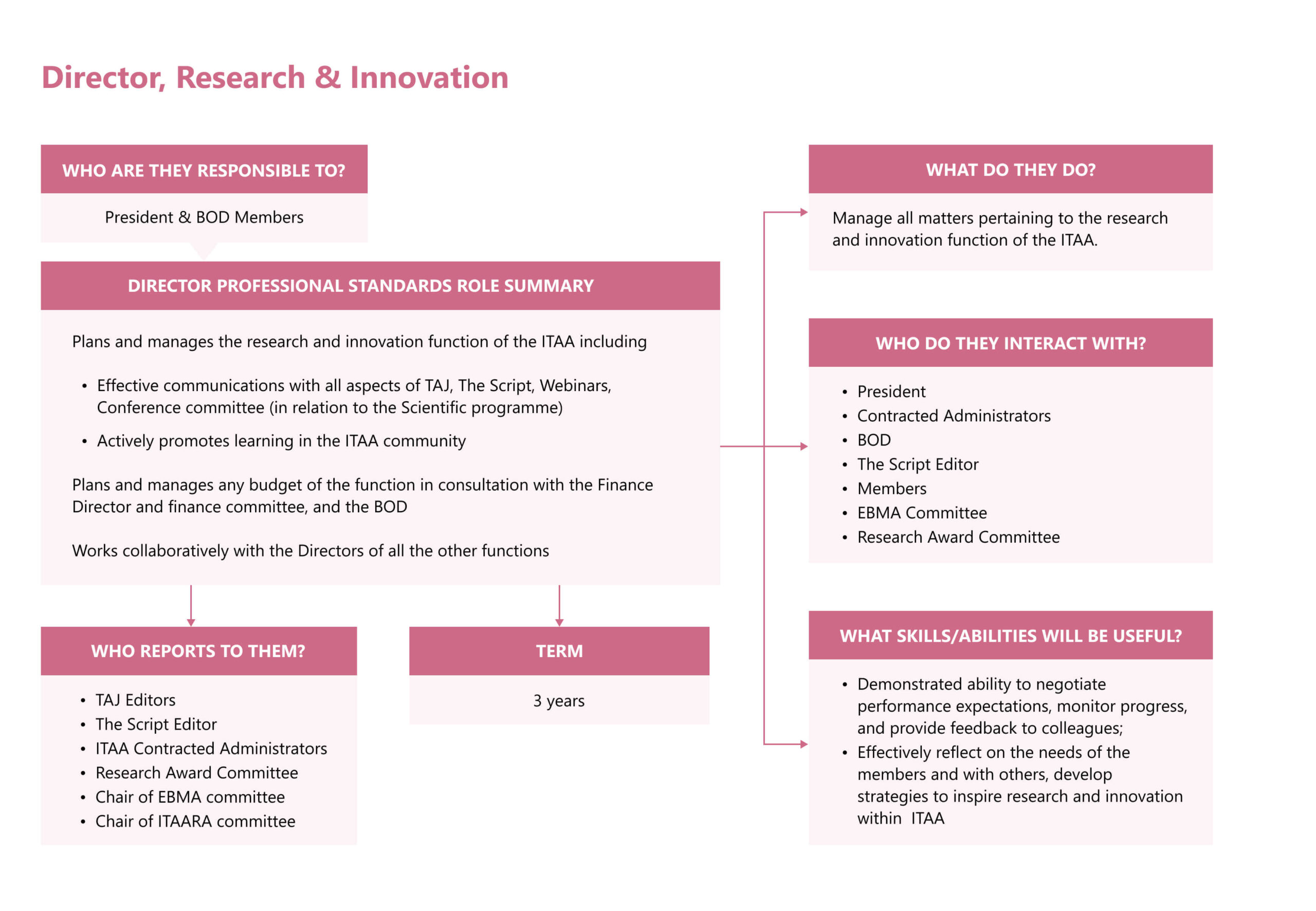

Director of Research and Innovation (D R&I)
The Director of Research and Innovation is an elected official of the ITAA, serving on the Executive Committee and the Board of Directors, responsible for the management of the Research and Innovation of the organisation.
The TAJ Editorial team, The Script Editors, Webinar team, as well as EBMA and Research Committees sit under the direction of this role.
Contact Details: director_r-i@itaaworld.com
General Functions
Specific Functions
Be in ongoing communication with:
Aims and Objectives of the role
To be responsible for the intellectual property of the TAJ and find innovative ways to make TA theory more widely known, i.e. webinars, getting TAJ articles listed, increasing the citation index etc.
Timeline for the year
Regular procedures
Important rules/policies/guidelines
Recognising the importance of editorial independence of the TAJ team and negotiating a bridge between ITAA and the TAJ team such that they are a working partnership and the TAJ editorial team have editorial independence.
Frequently Asked Questions
What difference does the role make to the functioning of ITAA?
Selection Criteria
In addition to the general criteria, skills, and abilities mentioned in the ITAA Roles Menu, the Director of Research and Innovation will have:
- A history of innovative contributions to TA through research, professional publications, programme development, education and/or other activities
- An ability to generate a creative vision of the development of TA and its applications to current fields and future trends
- Skills in technology, social media platforms, marketing and business practices.
- Familiarity with and involvement in forces and trends within the professional marketplace
- Skills in managing a budget and engaging in product development (i.e., to accurately anticipate costs and forecast profit)
- Participated in other professional and/or business organisations
- Served in a management and leadership capacity
- Organised and planned effectively, set goals and objectives, develop action plans, and set and carry out meeting objectives
- The skills and ability to negotiate performance expectations, monitor progress and provide feedback to colleagues
- The time and resources to fulfil the position